 By Alex Joy
A backyard can look beautiful from the kitchen window and still be a pain to walk through. There’s a patio near the house, a garden farther down the hill, and maybe a fire pit tucked into the corner. Getting between them means picking your way across uneven grass or following the same worn patch of dirt every time.
It’s a common frustration for homeowners with sloped properties, especially along Colorado’s Front Range, where a relatively modest change in elevation can make parts of a yard inconvenient to reach. People may spend considerable time choosing plants and planning outdoor seating areas without giving much thought to how they’ll move between those spaces. A well-placed set of landscape steps can make a noticeable difference, although getting them right takes more planning than choosing a few attractive stones.
Start With the Route People Already Use
Before deciding where steps should go, watch how people naturally move around the yard. The shortest route between the patio and a garden gate might seem obvious on paper, but homeowners often discover that people prefer a slightly different path because it avoids a steep section or lines up better with a doorway. Existing foot traffic can tell you quite a bit. Worn grass and compacted soil usually reveal where people are already walking, even if that route was never part of the original landscape design.
Think about what people might be carrying, too. Someone walking down to a garden with a watering can needs comfortable footing, and a route frequently used while carrying food to an outdoor dining area should be easy to navigate. Steps that look impressive from a distance won’t get much use if they’re awkward to climb. The surrounding landscape also matters. A path leading into a large lawn might benefit from broad, gradual steps, while a smaller garden with established planting beds may require a more compact layout.
Why Natural Stone Works Well on Uneven Terrain
Natural stone is particularly appealing for landscape steps because the available shapes and sizes allow designers to work with the character of the property. Large, flat stones can create broad treads, and their natural surfaces can complement nearby boulders, retaining walls, and planting areas.
Material selection deserves some attention before installation begins. Stone thickness, surface texture, and dimensions influence how a step should be supported and where it can be used. Some stones are better suited to pedestrian surfaces than others, especially in places that experience snow, ice, and repeated freezing and thawing. Homeowners researching natural stone landscaping materials can compare different stone types and consider how they might fit the existing yard. Seeing full-size pieces in person is particularly useful because a photograph rarely communicates their weight, texture, or scale. A stone that seems modest in a product photo can look considerably larger once it’s placed beside a narrow garden path.
The finished steps should provide comfortable, dependable footing. Their appearance will influence the landscape, but their dimensions and installation determine how well they function every day.
The Spacing Between Steps Matters
Imagine walking down a hillside where the first step has a shallow rise, the second is noticeably taller, and the third requires an unusually long stride. You’ll probably slow down and start looking at your feet instead of enjoying the garden. That uneven rhythm becomes particularly inconvenient when the steps are wet or covered with fallen leaves.
Consistent step heights and suitable tread depths make outdoor stairs more predictable to use. The exact dimensions depend on the application, the site, and any applicable building requirements. On longer slopes, a landing can provide a comfortable break between sections and create an opportunity to change direction without forcing the staircase into a straight line.
Proper installation matters as much as the arrangement. Each stone needs suitable support beneath it, and the surrounding soil must be prepared to limit settling and movement. Drainage deserves attention because water flowing down a hillside can gradually undermine poorly supported steps. If runoff regularly follows the same route as the proposed staircase, the drainage conditions should be evaluated before construction begins.
Think About Winter Before the First Stone Is Placed
A set of steps that works beautifully in July may become difficult to navigate in January. Northern Colorado winters bring snow, ice, and fluctuating temperatures. Shaded areas can remain slippery long after nearby surfaces have dried, while melting snow may run across a path and refreeze overnight. These conditions should influence the placement and surface characteristics of outdoor steps, especially along routes that homeowners expect to use throughout the winter.
Some natural stones have more textured surfaces than others, which can improve traction under certain conditions. Even so, no outdoor walking surface is guaranteed to remain slip-free during icy weather. Homeowners should consider how snow will be removed and where melting water will travel. A staircase that directs runoff toward the house or allows water to collect on individual treads may require adjustments to the surrounding grade or drainage.
Lighting is worth planning before the stonework begins. Low-voltage fixtures can help people see changes in elevation after dark, provided they’re positioned to illuminate the walking surface without creating uncomfortable glare.
Give the Steps a Reason to Be There
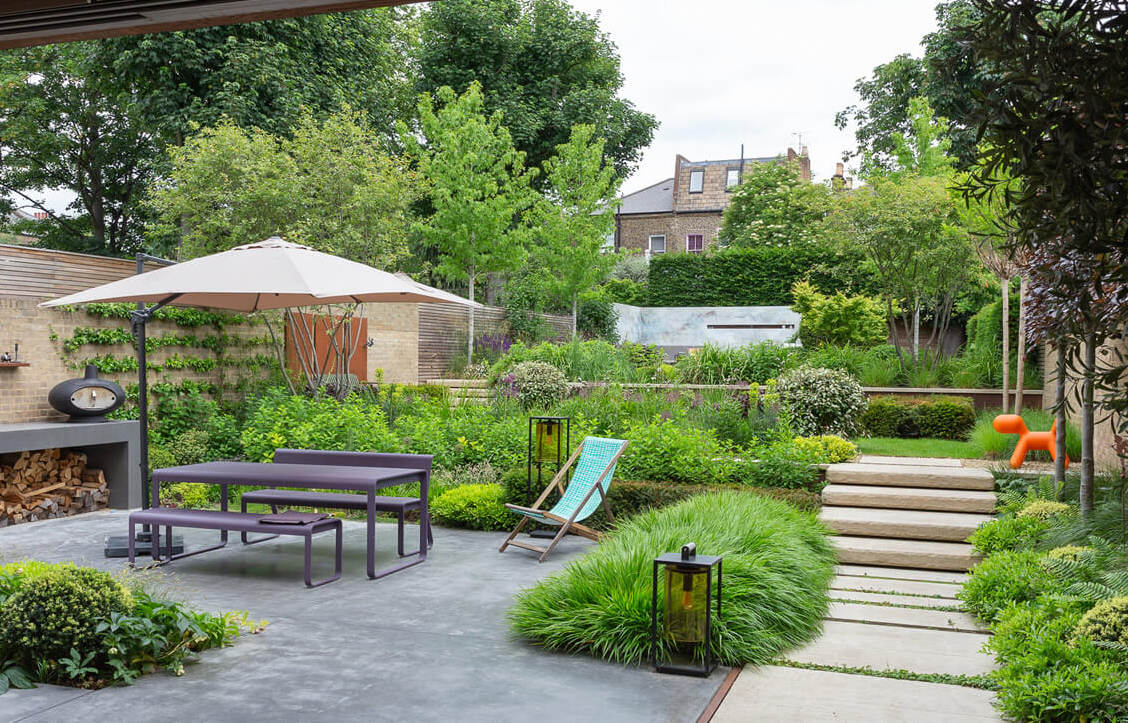
Outdoor steps often look most natural when they connect features that already belong in the landscape. A stone staircase might lead from a raised patio into a lawn, connect two garden terraces, or provide access to a seating area built into a hillside. The surrounding materials can help the steps feel like part of a larger design. Matching their general color and character to nearby retaining walls creates continuity, while planting along the edges can soften the transition between stone and soil.
For more substantial projects, homeowners may want to explore natural stone steps for landscape construction and the different dimensions and finishes available. Large-format steps can work particularly well where a broad transition is needed, although the weight of individual pieces often requires professional equipment and installation. Homeowners should also consider how the stone will be delivered to the installation area. A steep backyard with limited access can complicate a project long before the first step is positioned.
Leave enough room for routine maintenance as well. Shrubs planted too close to a staircase may eventually crowd the walking surface, and irrigation equipment should remain accessible without requiring someone to climb around the stonework.
A Small Change That Can Improve the Whole Yard
It’s surprising how often a backyard has everything homeowners wanted except a comfortable way to reach it. The patio is finished, the garden is established, and the fire pit has been installed, yet getting from one area to another remains inconvenient.
Stone steps can address that problem while giving a sloped landscape a more intentional layout. When they’re properly sized, supported, and positioned, they make everyday movement through the yard easier and help connect outdoor spaces that previously felt separated. They can also influence how homeowners use the yard over time. An area that once seemed too inconvenient to reach may become a favorite place to sit or spend time gardening once there’s a comfortable route leading to it.
That worn path through the grass may already be showing you where the next improvement belongs.