 By Alex Joy
Dining furniture plays a central role in shaping both the functionality and visual character of a home. Beyond serving as a place for meals, the dining area often becomes a space for conversation, celebrations, and daily connection. Choosing the right dining furniture style helps create harmony with surrounding interiors while improving comfort and usability.
This guide explores dining furniture styles that enhance modern homes and bring lasting visual value to everyday living spaces. 🍽️
Why Dining Furniture Style Matters in Interior Design
Dining furniture is often positioned in a visible central area of the home, making it one of the most influential interior elements. A well-chosen dining set improves spatial balance and strengthens the overall design theme.
Key advantages of selecting the right dining style include:
- Improved visual cohesion with surrounding rooms
- Enhanced comfort during meals and gatherings
- Better space utilization
- Stronger focal point within open-plan layouts
- Long-term durability and functionality
Thoughtful furniture selection supports both aesthetics and daily practicality.
Modern Minimalist Dining Furniture
Minimalist dining furniture focuses on simplicity, clean lines, and uncluttered surfaces. This style works especially well in contemporary homes and apartments.
Typical characteristics include:
- Smooth table surfaces with subtle finishes
- Neutral color palettes
- Slim-profile chair frames
- Straight-line silhouettes
- Lightweight visual structure
Minimalist dining sets help create calm and organized dining environments.
Scandinavian-Inspired Dining Designs
Scandinavian dining furniture combines warmth with simplicity. It emphasizes comfort, natural materials, and balanced proportions.
Common features include:
- Light-toned wood finishes
- Soft fabric-upholstered seating
- Rounded edges for a relaxed look
- Functional yet elegant forms
- Bright and airy color schemes
This style suits both compact and spacious dining areas.
Solid Wood Dining Furniture for Timeless Appeal
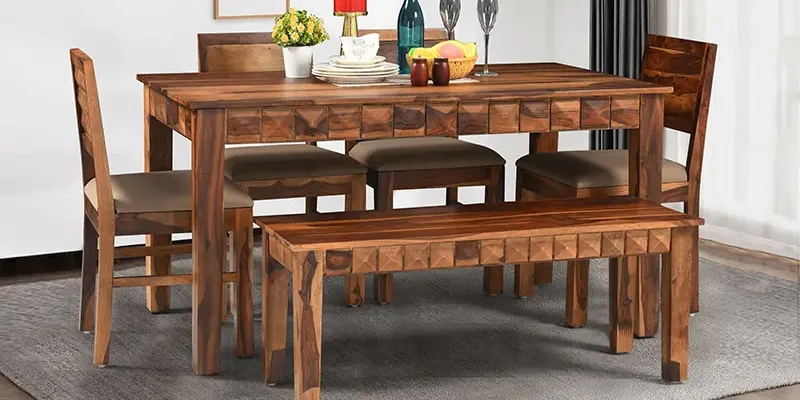
Solid wood dining sets remain one of the most reliable and visually rich choices for homeowners seeking durability and warmth.
Popular wood options include:
- Oak for strength and natural grain texture
- Sheesham for deep tones and character
- Walnut for refined elegance
- Teak for long-lasting performance
Wood furniture adds natural depth and improves the overall atmosphere of the dining space.
Industrial Dining Furniture Styles
Industrial dining furniture introduces a bold, structured aesthetic inspired by urban interiors. It blends raw materials with functional design.
Typical elements include:
- Metal table frames
- Wooden tabletops with visible grain
- Dark neutral color tones
- Open-frame chair structures
- Matte or brushed finishes
This style works particularly well in loft-style homes and modern open layouts. 🪵
Upholstered Dining Chairs for Comfort and Sophistication
Chair selection significantly influences dining comfort and appearance. Upholstered seating introduces softness and refinement.
Advantages include:
- Improved seating comfort for longer meals
- Added color layering within the room
- Better acoustic balance in open spaces
- Enhanced visual warmth
Fabric and leather upholstery both contribute to a more inviting dining environment.
Round Dining Tables for Flexible Layouts
Round dining tables create balanced seating arrangements and improve movement flow, especially in smaller spaces.
Benefits include:
- Encourages conversation among guests
- Eliminates sharp corners
- Supports compact room layouts
- Creates a softer visual presence
Round tables are particularly effective in apartments and breakfast areas.
Extendable Dining Tables for Versatility
Extendable tables provide flexibility without permanently occupying extra space. They adapt easily to different household needs.
Useful features include:
- Adjustable seating capacity
- Space-saving design
- Practical functionality for gatherings
- Compatibility with compact dining rooms
These tables are ideal for households that host guests occasionally.
Glass-Top Dining Tables for Modern Elegance
Glass-top dining tables introduce lightness and transparency into interiors. They help maintain openness in smaller or darker rooms.
Advantages include:
- Reflects light across the room
- Reduces visual heaviness
- Complements modern décor themes
- Easy integration with mixed-material chairs
Glass surfaces work well alongside metal or wooden frames.
Bench Seating for Casual Contemporary Spaces
Dining benches provide a relaxed seating option that suits both modern and family-friendly interiors.
Key benefits include:
- Space-efficient seating arrangement
- Flexible seating capacity
- Informal dining atmosphere
- Easy pairing with mixed chair styles
Benches also contribute to a balanced visual layout when placed against walls.
Mixed-Material Dining Furniture for Visual Contrast
Combining materials creates layered visual interest and strengthens design identity.
Popular combinations include:
- Wood and metal
- Glass and chrome
- Upholstery and timber
- Marble-inspired tops with wooden bases
Mixed-material dining furniture helps modern interiors feel dynamic and sophisticated.
Choosing the Right Dining Furniture for Your Space
Selecting dining furniture should reflect both room dimensions and lifestyle requirements.
Helpful selection considerations include:
- Available floor space
- Number of regular users
- Lighting conditions in the dining area
- Existing interior color palette
- Frequency of gatherings or hosting events
Balanced choices ensure both practicality and visual harmony.
Conclusion
Dining furniture styles influence how a home feels and functions on a daily basis. From minimalist and Scandinavian designs to industrial structures and solid wood classics, each style contributes unique character to interior spaces. By selecting dining tables and seating that align with layout, comfort needs, and design preferences, homeowners can create dining areas that feel welcoming, practical, and visually refined.
Frequently Asked Questions (FAQs)
1. What size dining table is suitable for a small dining room?
Compact rectangular or round tables seating four people usually work best in smaller dining areas.
2. Are marble-top dining tables suitable for everyday use?
Marble surfaces are elegant but require regular care to prevent staining and surface damage.
3. How much space should be left around a dining table for movement?
Leaving at least 36 inches of clearance around the table helps ensure comfortable movement.
4. Can different chair styles be paired with the same dining table?
Yes, mixing chair styles can create a modern and personalized dining setup when coordinated carefully.
5. Which dining furniture style suits open-plan living spaces best?
Minimalist and Scandinavian styles often integrate smoothly into open-plan interiors.
6. Is darker dining furniture suitable for small rooms?
Darker furniture can work well when balanced with lighter walls and adequate lighting.
7. How can dining furniture be protected from daily wear and tear?
Using placemats, protective coatings, and regular surface cleaning helps maintain furniture quality over time.