 By Alex Joy
A hardwood sideboard, a stained mattress, and a box of old paint all need different exit routes from a house. Deciding those routes before any lifting starts is what keeps a mixed clear-out to one weekend.
Three groups face this job most often: executors clearing deceased estates, downsizers leaving family homes, and owners preparing properties for sale. Disposal fees are rarely the biggest cost. Double handling and missed bookings usually cost more.
Stage three zones before moving anything
Clear a garage, carport, or open driveway and mark three zones with tape. Name them Liquidate or Gift, Donate, and Discard. Every item in the house passes through one of these zones before it leaves the property.
Work one room at a time, starting with the spaces used least. Spare rooms and sheds usually hold the easiest decisions.
Each item gets one decision the first time it is touched. A “maybe” pile just adds another round of handling to things that will end up discarded anyway.
Large furniture stays where it is until its zone is decided. Carrying a wardrobe to the curb and then learning the council rejects chipboard means carrying it back.
Tape, markers, and a notebook are the only equipment needed at this stage. Color-coded stickers help when several people are sorting at once.
Put the discard zone closest to the street or truck access point. That keeps the heaviest loads on the shortest carries.
Work backward from the deadline
Every clear-out has a fixed end date, even when it feels informal. Settlement day, a probate timeline, or a lease handover sets it. The plan runs backward from there.
Book the slowest services first. Charity furniture pickups and council curbside collections both run on lead times that can stretch to weeks.
Executors clearing a deceased estate face the tightest version of this. Personal effects, saleable assets, and waste arrive mixed together, usually at full-household volume.
Downsizers face a volume problem instead. A family household rarely fits a smaller home, so the Donate and Discard zones end up doing most of the work.
Share the date with everyone helping. Helpers make faster decisions when the deadline is fixed and known.
Professional rubbish removal sits last in the sequence because it is the flexible final option. Whatever remains after selling, gifting, donating, and council pickup goes last, in a collection booked for the volume left.
Keep a buffer of a few days between the last pickup and the deadline. A missed collection should not be what delays a settlement.
Sell only what clears the break-even threshold
The resale break-even threshold is the sale price that justifies the hours spent selling. Photographing, listing, messaging, and arranging pickup for a $40 bookcase can take two evenings.
Peer-to-peer resale carries friction at every step. Buyers message and vanish, offer half the asking price, or arrive without a suitable vehicle.
Flat-pack furniture rarely clears that threshold. Particleboard loses most of its value the day it leaves the store, and disassembly often finishes the job.
Solid hardwood behaves differently. Timber dining tables and hardwood dressers hold value for decades, and buyers will usually collect them.
Check sold listings when valuing an item. Asking prices show what sellers hope for; sold prices show what the market actually pays.
Listing fees and promoted placements reduce the margin on cheaper items. A free listing with a firm pickup time usually moves usable furniture within days.
Sellers who price their time honestly list fewer items. The rest go to Donate or Gift without a second thought.
Donate only what a charity can sell
Charity shops are retail operations with limited floor space, and their acceptance lists reflect that. Clean, complete, working items with all parts attached are the standard.
Stained or torn mattresses are refused almost everywhere. So are electrical goods without a current test tag, and flat-pack pieces with swollen chipboard or missing hardware.
The working test is straightforward: would the item sell on the shop floor today? If it needs qualifications, it belongs in Discard. Rejected donations become a disposal problem for the charity, not a free pass for the donor.
A call to the local op shop before loading the car saves a wasted trip. Many charities collect quality furniture themselves, which removes the transport problem.
Book that collection as soon as the Donate zone is set. Charity pickup slots fill days ahead. Furniture should be clean and assembled when the truck arrives.
Clothing and bric-a-brac go in sealed bags or boxes before drop-off. Loose items slow intake staff and are more likely to be refused at busy times.
Keep donation receipts where they are issued. Executors may need them for estate records, and sellers sometimes need proof of disposal.
Know the limits of council curbside collection
Council curbside cleanup collections run on booked schedules with strict volume limits. A pile that exceeds the booked allowance stays on the nature strip, and anything on the banned list stays with it. Building rubble, asbestos, car batteries, and liquids are routinely left behind by collection crews.
Limits are usually measured in cubic meters, and they differ between councils. One area’s accepted list can ban items a neighboring council takes.
Goods still on the curb after collection day remain the owner’s problem. Leaving them out can attract illegal dumping fines under environmental protection legislation.
Some councils include a set number of collections per property each year. Using one early in the clear-out removes bulk before the final push.
Check the accepted-materials list before staging day. Anything the council refuses needs its own route planned in advance.
Compare skip bins with load-and-go collection
A skip bin on a nature strip or street usually needs a council permit. The fee sits with the hirer. The bin then sits there for days, open to anyone passing.
Neighbors sometimes add their own rubbish overnight, and the hirer pays for the extra weight. Hoisting furniture over the rim of a bin also carries genuine injury risk.
Skips have weight limits, and heavy renovation debris reaches them fast. A bin filled with masonry or soil can cost well above the quoted hire price.
Many operators also restrict what goes in at all. Mattresses, tires, and hazardous items are commonly excluded or surcharged.
A loaded bin needs a surface that can take the weight. Pavers and older concrete can crack, and the delivery truck needs clear access as well.
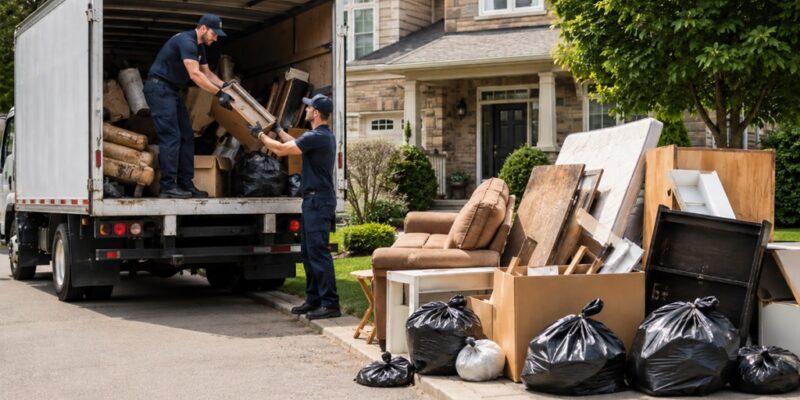
A load-and-go service works differently. A crew from Rubbish Removal Services Sydney does the lifting and loading, so confirm the items to go and the collection time when you book.
Ask what parking and access arrangements the collection requires. Stairs, narrow access, heavy furniture, and mixed renovation debris all suit this format. One booked visit replaces the bin and the permit.
Divert hazardous and specialist waste properly
Some items are refused by the curb, the skip, and the charity alike. Paint, motor oil, gas bottles, fluorescent globes, and car batteries belong at a Community Recycling Centre.
These depots exist for hazardous domestic waste that has no place in general bins. Check opening days before loading the car, because many run limited weekend hours.
Televisions and computers have their own route. The National Television and Computer Recycling Scheme funds drop-off points for e-waste. Items collected there are recycled under producer responsibility rules.
Fridges and freezers need degassing before their metal can be recycled. A licensed technician reclaims the refrigerant, and only then does the cabinet become scrap steel.
Mattresses combine several materials in one bulky item: steel springs wrapped in foam and fabric. Social enterprises such as Soft Landing strip mattresses by hand, diverting both the steel springs and the textiles from landfill.
Sorting these items at the staging stage costs nothing extra. Transfer stations refuse some of them in mixed loads, and others carry separate disposal fees.
Ask where the load ends up
Every mixed load goes somewhere, and the destination matters twice: once for cost and once for compliance. The NSW Landfill Levy feeds directly into tipping prices, so heavy mixed loads cost the most to dump.
Pulling dense recyclables out of a load cuts that cost. Licensed Resource Recovery Facilities extract timber, masonry, and scrap metal from mixed loads. Only the remainder goes to landfill, and a contractor who tips at one can quote lower disposal costs as a result.
Ask any operator which facility receives their loads. A specific answer indicates a documented chain of custody. A vague one usually means everything goes straight to the tip.
Two quotes that differ widely usually differ on disposal costs. The cheaper one may be pricing a straight run to landfill.
A written quote should name the disposal facility or at least the disposal method. Executors and sellers both benefit from that paperwork if questions come up later.
Insurance is the other check. A crew carrying whitegoods down stairs should hold current public liability cover, and asking for proof is standard.
Protect the property during extraction
Measure the largest items against every doorway, hallway, and stair turn before lift day. Removing a door from its hinges takes two minutes and buys a few extra centimeters.
Furniture blankets or flattened cardboard shield timber floors along the exit path. Sheets of plywood spread the weight of a fridge trolley across driveway pavers.
Whitegoods move best on a trolley with the doors taped shut. Keep fridges upright where possible, because laying them down can damage the cooling system.
Cabinetry comes apart faster than it comes through a doorway in one piece. Heavy items need two people and a planned route, with no rushed carries.
Label the items that stay. A crew moves fast, and a clear “staying” tag keeps the wrong wardrobe off the truck.
Finish with a walk through sheds, roof storage, and under-house spaces. Anything found after the truck leaves is a second job nobody budgeted for.