 By Alex Joy
Maintaining a clean home becomes significantly easier when clutter is under control. Excess items create hidden dust zones, slow down routine cleaning, and make spaces feel overwhelming. Strategic decluttering simplifies daily upkeep, improves efficiency, and helps create a calmer living environment.
This guide explains practical decluttering strategies that reduce cleaning effort while supporting long-term organization and comfort. 🧹
Why Decluttering Makes Cleaning Faster and More Effective
Clutter blocks access to surfaces and traps dust in corners, under furniture, and inside storage areas. When unnecessary items are removed, cleaning becomes quicker and more thorough.
Key benefits include:
- Faster surface wiping
- Easier vacuuming and sweeping
- Better airflow across rooms
- Reduced dust accumulation
- Improved visual clarity in living spaces
A simplified environment allows routine cleaning to become manageable instead of time-consuming.
Start with High-Impact Areas First
Decluttering works best when you begin with spaces used daily. These areas influence overall cleanliness the most.
Focus on:
- Entryways
- Kitchen counters
- Living room tables
- Bathroom surfaces
- Bedroom nightstands
Clearing these zones creates immediate improvement and builds motivation to continue.
Use the One-Year Rule for Decision-Making
A practical strategy for reducing excess items is evaluating how often something is used. If an object hasn’t been used within the past year, it likely does not need to remain in your daily space.
Consider removing:
- Unused kitchen tools
- Extra décor pieces
- Duplicate household items
- Outdated paperwork
- Rarely worn clothing
This method prevents overthinking and speeds up sorting decisions.
Declutter by Category Instead of Location
Sorting items by type helps reveal how much you actually own. This approach prevents shifting clutter from one area to another.
Common categories to review include:
- Clothing
- Books
- Electronics
- Cleaning supplies
- Storage containers
Grouping similar items together highlights unnecessary duplicates quickly.
Create Dedicated Storage Zones
Cleaning becomes easier when every item has a defined place. Without designated storage zones, objects tend to migrate across rooms and accumulate on surfaces.
Helpful storage solutions include:
- Drawer organizers for small essentials
- Storage baskets for daily-use items
- Shelf dividers for linens and clothing
- Labeled containers for seasonal belongings
Clear storage boundaries reduce daily mess buildup. 📦
Reduce Paper Clutter Strategically
Paper is one of the fastest-growing sources of household clutter. Bills, receipts, packaging inserts, and manuals often pile up unnoticed.
Simple solutions:
- Switch to digital statements when possible
- Recycle unnecessary packaging immediately
- Store important documents in labeled folders
- Review paper stacks weekly
Managing paper clutter improves workspace cleanliness and reduces stress.
Apply the “One In, One Out” Rule
To prevent clutter from returning, balance incoming items with outgoing ones. Every new purchase should replace something similar.
Examples:
- Donate one shirt when buying another
- Remove an old container when adding new kitchenware
- Replace outdated décor instead of stacking extras
This habit supports long-term organization without extra effort.
Keep Cleaning Tools Easily Accessible
When cleaning supplies are difficult to reach, small messes tend to stay longer. Accessibility encourages quick action.
Store essentials such as:
- Microfiber cloths
- Multi-surface spray
- Hand vacuum
- Trash liners
Quick-response cleaning prevents clutter from spreading. 🧽
Declutter in Short, Consistent Sessions
Large decluttering projects can feel overwhelming. Instead, short sessions help maintain momentum without exhaustion.
Effective routines include:
- 10-minute evening resets
- Weekend category-based sorting
- Monthly wardrobe checks
- Seasonal storage reviews
Consistency delivers lasting results more reliably than occasional deep cleanouts.
Limit Decorative Overload
Decor enhances a home, but too many decorative items create extra surfaces that collect dust.
Simplify décor by:
- Choosing fewer statement pieces
- Rotating seasonal decorations
- Leaving some surfaces intentionally clear
- Keeping shelves partially open for balance
Minimal surfaces reduce daily maintenance effort.
Build Daily Reset Habits
A short reset routine at the end of each day prevents clutter from building up again.
Simple reset habits:
- Return items to their storage zones
- Clear kitchen counters
- Fold blankets and cushions
- Empty small trash bins
- Organize frequently used spaces
These small steps support a consistently tidy environment. ✨
Involve the Entire Household
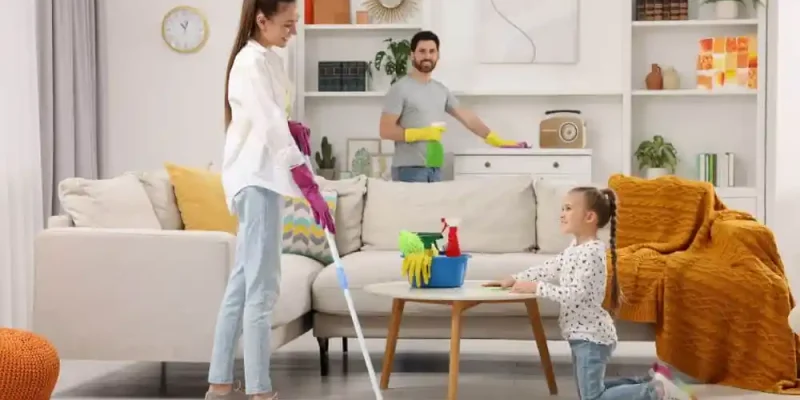
Decluttering becomes sustainable when everyone participates. Shared responsibility prevents clutter from returning quickly.
Encourage:
- Personal storage ownership
- Weekly family reset routines
- Donation sorting together
- Shared cleaning expectations
Collaboration keeps spaces manageable for everyone.
Conclusion
Decluttering is one of the most effective ways to simplify cleaning routines and maintain a comfortable home. By removing unused items, organizing storage zones, limiting incoming clutter, and building daily reset habits, households can reduce cleaning time while improving overall living conditions. Small, consistent changes create long-term results that make maintaining cleanliness easier and more sustainable.
Frequently Asked Questions (FAQs)
1. How long does it usually take to see results after decluttering?
Many people notice improvements in cleaning speed and room appearance within a few days of removing surface clutter from high-use areas.
2. Should decluttering be done room by room or all at once?
Working room by room is usually more manageable and prevents burnout, especially for larger homes.
3. What should be done with items that are difficult to discard?
Consider placing them in a temporary review box and revisiting the decision after a few weeks.
4. Is decluttering helpful before hiring professional cleaning services?
Yes, removing excess items allows professionals to clean more efficiently and thoroughly.
5. How can decluttering help reduce stress at home?
Organized environments reduce visual overload and make everyday routines smoother and more predictable.
6. What is the best time of year to declutter a home?
Seasonal transitions such as spring and early winter are ideal because storage needs typically change during these periods.
7. Can decluttering improve productivity while working from home?
Yes, reducing desk and workspace clutter helps maintain focus and supports better task management throughout the day.