 By Alex Joy
Modern homes increasingly prioritize kitchens that combine efficiency, comfort, and visual appeal. Modular kitchens have become a preferred choice because they offer flexibility, smart storage, and a clean layout that adapts to changing lifestyle needs. Today’s homeowners are selecting designs that balance practicality with contemporary aesthetics while making daily cooking routines smoother and more organized.
This article explores the modular kitchen trends that are shaping modern homes and improving everyday usability. 🍳
Why Modular Kitchens Are Popular in Modern Homes
Modular kitchens are designed using pre-built cabinet units and functional components that can be customized according to available space and household needs. Their structured layout improves workflow and keeps essential items easily accessible.
Key advantages include:
- Efficient space utilization
- Organized storage solutions
- Easier installation and maintenance
- Customizable layouts
- Improved visual consistency
These benefits make modular kitchens suitable for both compact apartments and spacious homes.
Handleless Cabinet Designs for a Sleek Look
Handleless cabinets are becoming increasingly popular because they create a streamlined and clutter-free appearance. Push-to-open mechanisms and recessed grips enhance both convenience and style.
Benefits of handleless designs include:
- Smooth cabinet surfaces
- Reduced visual interruptions
- Safer movement in compact kitchens
- Easier cleaning around cabinet fronts
This trend supports minimalist interior themes effectively.
Matte Finish Cabinets for Subtle Elegance
Matte finishes are replacing glossy surfaces in many modern kitchens. They offer a refined appearance while reducing visible fingerprints and smudges.
Popular matte color choices include:
- Soft grey
- Warm beige
- Charcoal tones
- Deep navy accents
- Muted green shades
Matte textures help create a calm and sophisticated kitchen atmosphere.
Smart Storage Solutions for Better Organization
Efficient storage remains one of the biggest advantages of modular kitchens. Modern layouts prioritize accessibility and space optimization.
Trending storage features include:
- Pull-out pantry units
- Corner carousel shelves
- Vertical spice racks
- Drawer organizers for utensils
- Under-sink storage compartments
These additions make daily cooking tasks faster and more convenient.
Two-Tone Cabinet Color Combinations
Two-tone kitchen cabinetry is gaining popularity because it adds visual contrast without overwhelming the space.
Common combinations include:
- Light upper cabinets with darker lower units
- Neutral tones paired with wood textures
- Soft pastel shades combined with white finishes
- Matte finishes blended with natural surfaces
Balanced color contrast enhances depth and character in kitchen layouts.
Quartz Countertops for Durability and Style
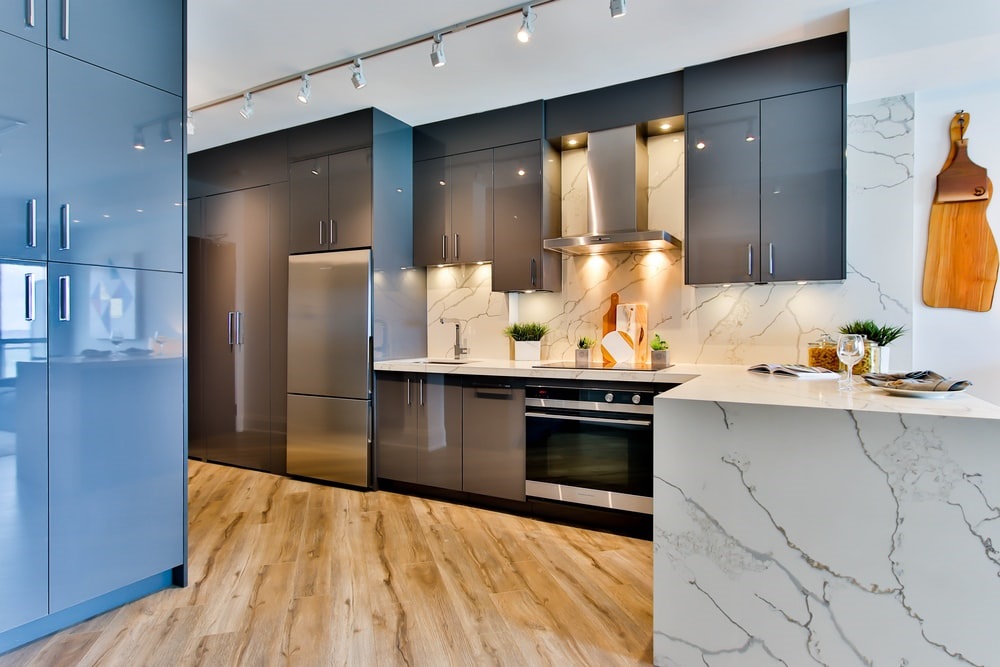
Quartz countertops are widely preferred due to their strength, low maintenance needs, and modern appearance. They resist stains and scratches better than many traditional materials.
Advantages include:
- Non-porous surface structure
- Easy cleaning routine
- Consistent color patterns
- Long-lasting durability
Quartz surfaces support both functionality and aesthetics.
Open Shelving for a Contemporary Touch
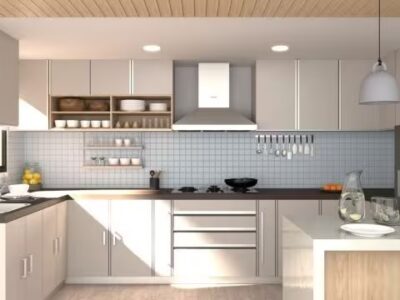
Open shelving introduces a lighter visual feel compared to fully enclosed cabinetry. It allows homeowners to display frequently used items or decorative elements.
Popular uses include:
- Displaying ceramic containers
- Storing daily-use dishes
- Showcasing indoor herb plants
- Adding small decorative accents
When used thoughtfully, open shelves improve accessibility without cluttering the kitchen.
Integrated Appliances for Seamless Design
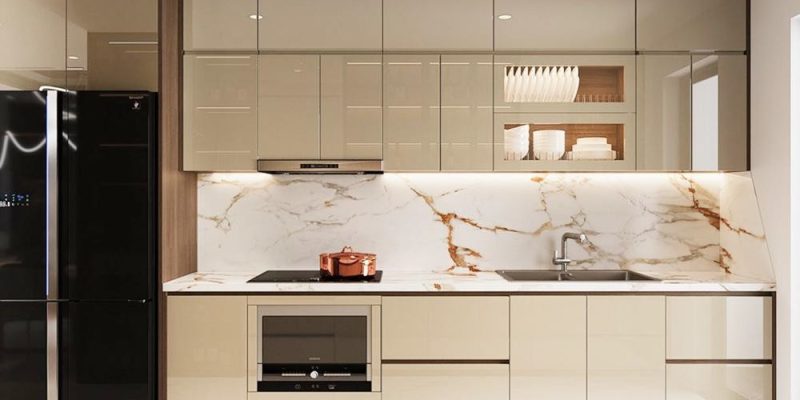
Built-in appliances help maintain visual continuity across modular kitchens. They reduce surface interruptions and improve movement flow.
Common integrated appliances include:
- Built-in ovens
- Chimneys with concealed ducting
- Under-counter dishwashers
- Integrated refrigerators
This trend supports clean and modern kitchen layouts.
Under-Cabinet Lighting for Improved Visibility
Lighting plays a major role in kitchen efficiency. Under-cabinet lighting improves workspace visibility while enhancing overall ambiance.
Benefits include:
- Better illumination for food preparation
- Reduced shadow areas
- Improved visual depth
- Modern layered lighting effect
Warm LED strips are especially popular for modular kitchens. 💡
Compact Island Counters for Multi-Functional Use
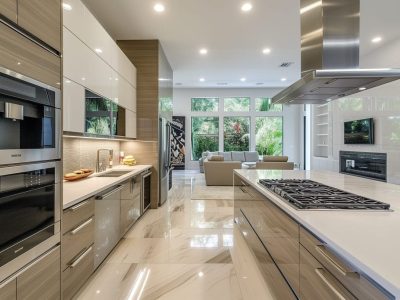
Kitchen islands are no longer limited to large homes. Compact island counters are now designed to fit medium-sized layouts as well.
Practical island uses include:
- Additional preparation space
- Casual dining surface
- Storage integration
- Appliance placement zones
Islands increase both convenience and interaction within the kitchen.
Sustainable Material Choices in Modern Kitchens
Homeowners increasingly prefer eco-conscious materials that support durability and environmental responsibility.
Common sustainable choices include:
- Engineered wood cabinetry
- Recycled composite surfaces
- Energy-efficient lighting fixtures
- Low-maintenance countertop materials
Sustainable selections contribute to long-term kitchen efficiency.
Vertical Storage to Maximize Compact Kitchens
Vertical storage solutions help make the most of limited kitchen space without overcrowding the floor area.
Effective vertical options include:
- Tall pantry cabinets
- Ceiling-height storage units
- Wall-mounted utensil organizers
- Hanging racks for cookware
Vertical planning improves accessibility and organization in smaller kitchens.
Conclusion
Modern modular kitchen trends focus on combining smart storage, streamlined layouts, durable materials, and balanced aesthetics. Features such as handleless cabinets, matte finishes, integrated appliances, quartz countertops, and layered lighting help create kitchens that are efficient and visually refined. By selecting practical yet stylish components, homeowners can design modular kitchens that remain functional, comfortable, and relevant for years to come.
Frequently Asked Questions (FAQs)
1. What is the ideal layout for a modular kitchen in compact homes?
L-shaped and parallel layouts usually work best in smaller homes because they optimize movement and storage space.
2. Are modular kitchens easy to maintain compared to traditional kitchens?
Yes, modular kitchens are designed with removable components and smooth surfaces that simplify cleaning and repairs.
3. How long does it typically take to install a modular kitchen?
Installation usually takes a few days depending on layout complexity and customization requirements.
4. Can modular kitchens be redesigned later if needs change?
Yes, modular components allow adjustments and replacements without rebuilding the entire kitchen.
5. Which countertop material works best for heavy cooking use?
Quartz and granite are commonly preferred because they resist heat and surface damage effectively.
6. Is ventilation planning important in modular kitchen design?
Proper ventilation helps maintain air quality and prevents grease accumulation in enclosed kitchen layouts.
7. Are modular kitchens suitable for rental apartments?
Yes, compact modular setups can be adapted to rental spaces with minimal structural modification.